Local waste officials are calling on people to help prevent fires by recycling their broken festive lights, batteries and other FastTech gifts this Christmas.
Authorities across the Liverpool City Region are working with Recycle Your Electricals to encourage residents to join the ‘Stop Battery Fires’ campaign, which sets out to encourage the recycling of batteries and electrical gifts as part of an effort to reduce the surge of fires in the waste stream.
The campaign comes as it is revealed that binned battery-powered fairy lights alone stretch to the equivalent of just over seven Santa trips around the globe (1).
Lesley Worswick, Chief Executive of Merseyside Recycling and Waste Authority, said: “Many ‘FastTech’ or light-up electrical items are powered by batteries which, if end up in the wrong bin, get crushed and damaged in bin lorries, waste transfer stations and Recycling Centres, sparking dangerous fires that put firefighters and waste workers at serious risk. All of the region’s Household Waste Recycling Centres accept batteries, as do the majority of supermarkets, so we’d encourage people to dispose of them responsibly.”
The Recycle Your Electricals campaign has found that 1.1bn of all types of electricals and 449.9m loose volatile batteries have been binned – each a potential fire waiting to happen (2).
In the UK, there were over 1,200 battery fires during 2023/24, an increase of 71% in 2022 – with many taking place in bin lorries, waste transfer stations and Recycling Centres as a result of batteries and electricals being binned or incorrectly recycled (3).
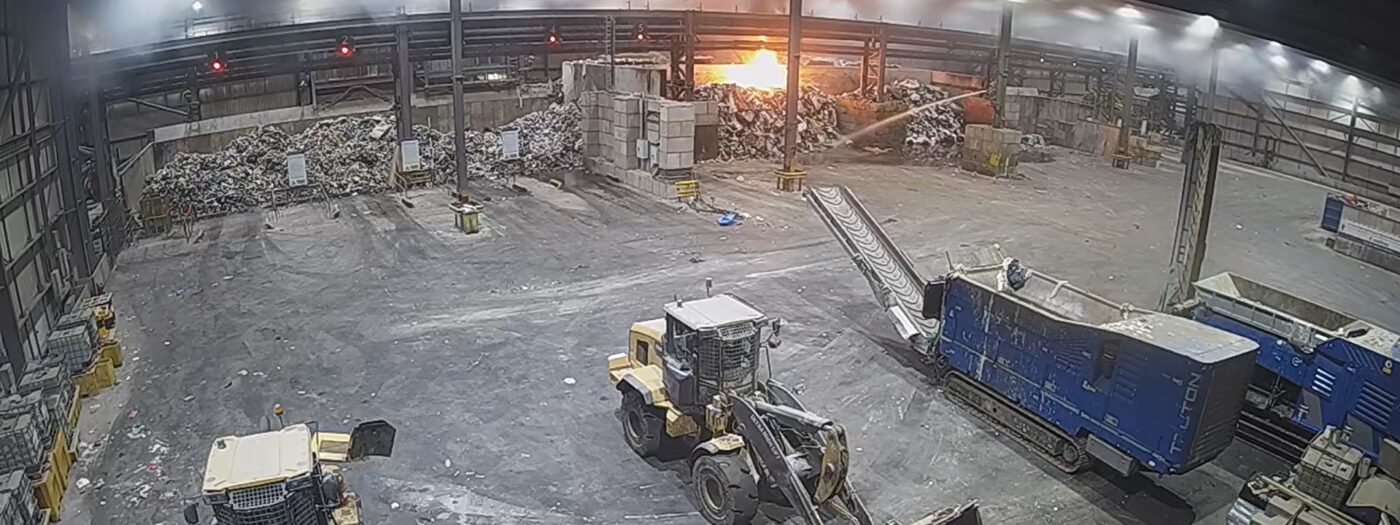
Since January 2024 there have been 155 fires at the MRWA/SUEZ Rail Transfer Loading Station in Kirkby, Knowsley – 61 in 2024 and 94 in 2025 so far (pictured below).
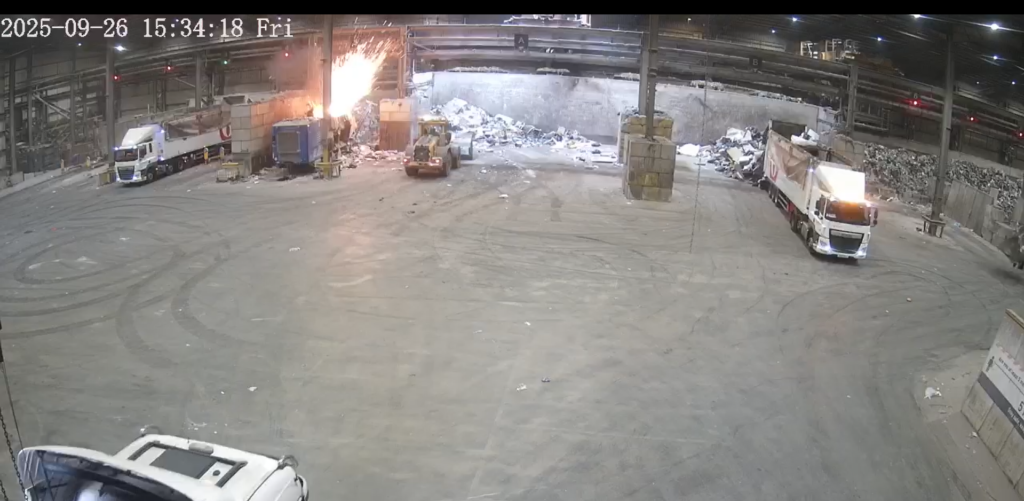
Steve Patterson, Processing Managing Director at SUEZ recycling and recovery UK, said: “A fire in one of our waste facilities is one of the things that we dread the most. A battery can go from nothing to a full-blown blaze in seconds, putting not just the facility but our teams at risk. With the rise in FastTech, and particularly at this time of year, it’s really important that the message to not put batteries or electrical items in waste or recycling bins becomes more widespread.”
Niamh McBride, Local Authority and Environmental Partnerships Manager at Material Focus, the not-for-profit behind the Recycle Your Electricals campaign, says: “When recycling any electrical item, if you can, make sure the battery is removed from the item. And then take your electricals and batteries to your nearest recycling point which you can find by searching up recycle your electricals and using our Postcode Locator. Most importantly, never bin your old batteries and electricals – always recycle them separately from household recycling or rubbish, to keep fire services, waste crews and local communities safe.”
When electricals are properly recycled, valuable resources including copper, lithium, gold and nickel, can be reused and recycled into new items such as mobile phones, laptops, smart watches, clean energy and even medical equipment.
It’s now easier than ever to recycle broken and unused electricals using Recycle Your Electricals’ Postcode Locator – https://www.recycleyourelectricals.org.uk/electrical-recycling-near-me/. Just enter your postcode to find your nearest repair, donation or recycling point which has over 30,000 locations across the UK.
Visit www.recycleright.org.uk for local recycling advice in Liverpool City Region.
ENDS
Notes to editors:
Attached images and linked videos show fires at the MRWA/SUEZ Rail Transfer Loading Station in Kirkby, Knowsley – https://we.tl/t-7Cbj8B4uQr
(1) Christmas Research Lights research methodology:
● Desk research to Jackson’s Nurseries, the most common heights of Christmas Trees in the UK are 5–6 ft (150–175 cm) and 6–7 ft (175–200 cm). We took an average of 6ft.
● Desk research from Ideal Home showed that 15m is the recommended length for a 6ft tree.
● Desk research from Universe Today showed the route around the globe was 40,075,017 meters.
● To work out the number of battery powered fairy lights, this took the total number of hanging/string/fairy lights bought in the last year from the Opinium research conducted for Material Focus, titled Christmas Fastech: 39,145,582.
● To work out the number of these lights that were battery-powered, we used the result from the same research that showed that 49.3% of light-up Fastech was battery powered.
● The calculation was then executed as follows:
o 39,145,582 light-up fairy lights x 0.493 = 19,298,772 battery powered lights.
o Battery powered lights x average length = 19,298,772 x 15 = 289,481,578.9
o Total length of lights / length of route around the globe = 289,481,578.9 / 40,075,017 = 7.2
(2) Opinium research conducted for Material Focus. Battery Recycling research, 2nd – 5th April 2024 amongst a nationally-representative sample of 4000 UK adults. For more details, visit: https://www.materialfocus.org.uk/?press-releases=over-1200-battery-fi res-in-bin-lorries-and-waste-sites-across-the-uk-in-last-year
(3) Local authority research conducted by Material Focus – for full methodology see below.
Report comprises:
● Opinium research conducted for Material Focus. Titled Christmas Fastech, dated 25th – 28th September 2025. A nationally-representative sample of 4,000 UK adults was weighted to be representative of UK adults (18+) on age and gender, region, working status, and social grade.
● Opinium research conducted for Material Focus. Titled FastTech – State of the Nation 2025, dated 20 March – 30 March 2025. A nationally-representative sample of 4,000 UK adults was weighted to be representative of UK adults (18+) on age and gender, region, working status, and social grade.
● Opinium research conducted a study from 2nd to 5th April 2024. A sample of 4,000 UK adults was selected to ensure a representative distribution across key demographic factors such as age, gender, region, and socio-economic status.
● Battery Fire research with local authorities. (Methodology below)
● Recycling information provided by Material Focus
Christmas Research Lights research methodology:
● Desk research to Jackson’s Nurseries, the most common heights of Christmas Trees in the UK are 5–6 ft (150–175 cm) and 6–7 ft (175–200 cm). We took an average of 6ft.
● Desk research from Ideal Home showed that 15m is the recommended length for a 6ft tree.
● Desk research from Universe Today showed the route around the globe was 40,075,017 meters.
● To work out the number of battery powered fairy lights, this took the total number of hanging/string/fairy lights bought in the last year from the Opinium research conducted for Material Focus, titled Christmas Fastech: 39,145,582.
● To work out the number of these lights that were battery-powered, we used the result from the same research that showed that 49.3% of light-up Fastech was battery powered.
● The calculation was then executed as follows: o 39,145,582 light-up fairy lights x 0.493 = 19,298,772 battery powered lights.
o Battery powered lights x average length = 19,298,772 x 15 = 289,481,578.9
o Total length of lights / length of route around the globe = 289,481,578.9 / 40,075,017 = 7.2
Battery Fire research with local authorities methodology:
In 2024, Material Focus sent a survey to local authorities across the UK. Material Focus asked local authorities if they had experienced any fires caused by crushed or damaged batteries in the waste stream and any further details they could give. 77 local authorities responded to the survey, stating that 242 fires had occurred. This equates to an average of 3.14 fires per local authority area. This number was then averaged across the 382 local authorities in the UK to over 1,200 fires. Out of the 53 areas who responded to the detailed survey, 50 of those surveyed said that fires are increasing, equalling 94%.
About Material Focus and Recycle Your Electricals
Material Focus is a not-for-profit organisation whose goal is to stop the nation throwing away or hoarding all their old, small electricals. Material Focus is delivering the UK-wide Recycle Your Electricals campaign. The campaign is revealing the value hidden in electricals and is making it easier for us all to recycle and reuse the small electricals we no longer need by providing more recycling points as well as providing practical information on how households can reuse and recycle. The campaign is funded by producers of electrical appliances which pays for a range of activities, including communications, behaviour change activities, increased recycling projects and research. Ultimately the aim is to support actions that will help the UK increase the levels of reuse and recycling of waste electricals.
About MRWA
Merseyside Recycling and Waste Authority is responsible for the disposal of municipal waste on Merseyside. Established in 1986 following the abolition of Merseyside County Council, it is a statutory Authority that works with Halton, Knowsley, Liverpool, Sefton, St Helens and Wirral councils. MRWA takes a lead in advocating recycling, waste prevention and the safe and effective disposal of waste for Merseyside residents. www.merseysidewda.gov.uk
About SUEZ recycling and recovery UK
SUEZ recycling and recovery UK employs more than 7000 people, operating across hundreds of sites (including MRWA’s Kirkby Rail Transfer Loading Station and Wilton EfW), and handles approximately 11 million tonnes of waste materials every year – a significant proportion of the UK’s total waste. Through collection, treatment, recycling and logistics operations, it serves more than 30,000 business customers and millions of householders throughout the country. Please visit https://www.suez.co.uk to find out more.